
Investment Banking
Trade Capture Process: Data Checks and Controls
Follow trade capture from source instruction to system record, validation, correction and audit evidence in an investment-operations workflow.
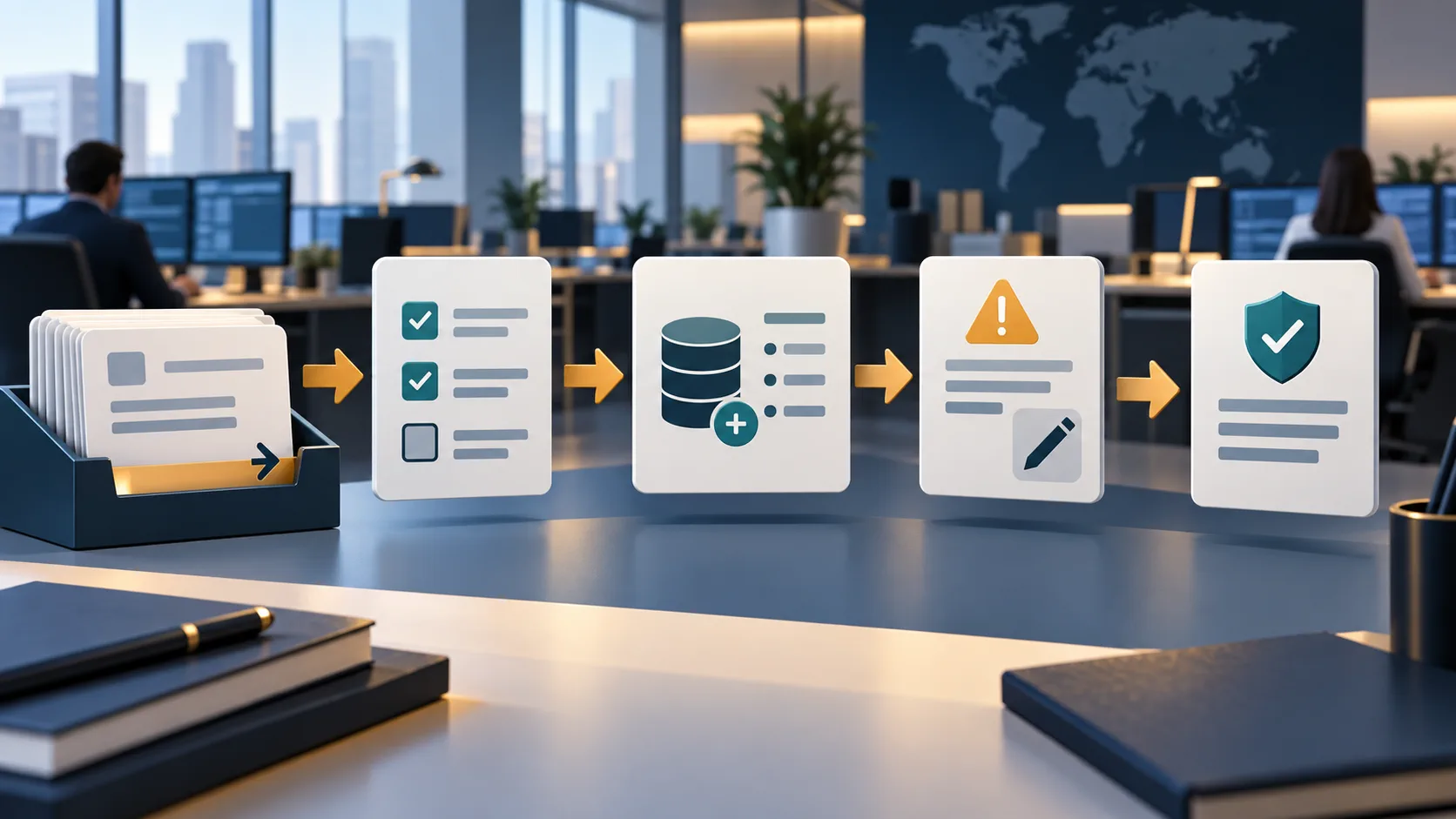
Trade capture is the process of recording an executed or instructed transaction in an authorised system so its economic details can flow to confirmation, settlement, accounting, risk and reporting. The exact fields and sequence depend on the asset class, market, institution and platform. A trade operations analyst does not improve a record by guessing a missing value. They compare the source, validate the required fields, record corrections through the approved workflow and preserve evidence. This article uses a fictional workflow and is not investment advice or a trading instruction.
What a trade-capture record needs
A capture record may contain transaction type, instrument or security identifier, side, quantity or notional, price, currency, trade date, settlement date, counterparty, account, venue or source, broker or custodian details and other asset-specific fields. Not every field applies to every transaction. The analyst checks the required data dictionary and source instruction rather than copying a generic list. A correct-looking record with a wrong account, date or currency can create downstream breaks.
The capture workflow
- Receive the source instruction or execution record through an authorised channel.
- Check that the source is complete, within scope and associated with the correct account or portfolio.
- Enter or ingest the required fields using controlled mappings and validation rules.
- Compare the captured record to the source and identify missing, inconsistent or duplicate values.
- Route exceptions for correction and approval; do not overwrite the source or silently change a material field.
- Release the validated record to downstream confirmation, settlement, accounting or reporting workflows and retain the audit trail.
A fictional data exception
A fictional source instruction records a bond trade in one currency, while the captured record uses the account's default currency. The analyst checks the original instruction, instrument reference and account mapping, then places the record in the authorised exception queue. A reviewer confirms the corrected value and the system retains who changed it, why and when. The analyst does not infer currency from the instrument name or release the trade because the total looks plausible. All names and values are invented.
Controls worth testing
- Source-to-system completeness and duplicate detection.
- Field-level validation for dates, currency, quantity, account and instrument identifiers.
- Controlled reference data and change history for mappings.
- Maker-checker or independent review for corrections and manual entries where required.
- Downstream reconciliation to confirmation, settlement, position, cash or accounting records.
- Ageing and ownership for unresolved capture exceptions.
Why capture errors travel downstream
A wrong field at capture can become a confirmation break, an incorrect settlement instruction, a position difference, a cash mismatch or a reporting exception. The impact depends on the transaction and the field. That is why a correction should be assessed for downstream records and not treated as a local spreadsheet fix. Operations teams can reduce repeat errors by classifying the source: incomplete instruction, reference-data problem, interface rejection, duplicate, manual entry or unclear ownership. The improvement action should be testable and assigned to a process owner.
- Trace the record from source to the first downstream consumer.
- Check whether a correction requires confirmation or settlement follow-up.
- Keep the original and corrected values visible in the audit history.
- Measure recurring exceptions by field and source.
- Escalate a systemic issue instead of repeatedly repairing individual records.
Follow the trade lifecycle in investment banking
Review securities operations workflow and roles
Understand where operations fits in investment banking
For interview preparation, pick one field error and explain the source, validation, impact, correction approval and downstream check. That answer demonstrates control thinking without pretending that one platform's data model applies everywhere. Centaur Careers publishes this article for education; it is not trading, investment, accounting, legal or employment advice.
Continue your finance career journey
Explore the learning tracks and placement support available through Centaur Careers.