
Finance Operations
General Ledger vs Subledger: Differences and Reconciliation
Learn how the general ledger and subledger connect, why balances differ, and how finance teams investigate and document reconciliation breaks.
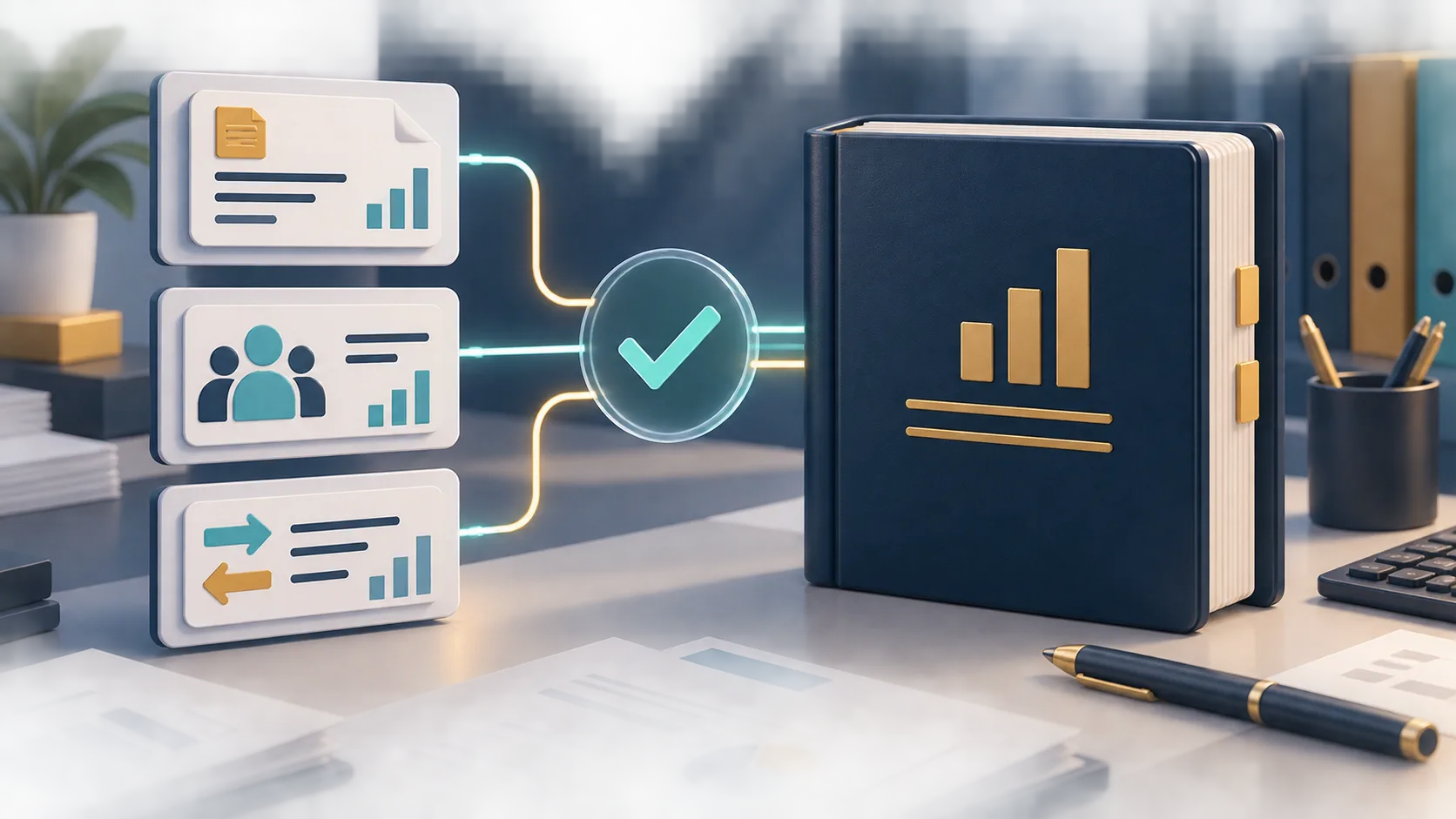
The general ledger is the central accounting record used to organise an entity's balances, while a subledger stores detailed activity for a specific population such as suppliers, customers, fixed assets or loans. The two should connect through defined posting and reconciliation rules, but they are not the same record. A subledger-to-general-ledger reconciliation explains whether the detailed transactions support the control-account balance. This guide uses fictional examples and is intended for finance learning, not as a substitute for an organisation's accounting policy or audit procedure.
General ledger and subledger in simple terms
Think of the general ledger as the structured summary and the subledger as the supporting detail. An accounts-payable subledger may hold each supplier invoice, credit note, payment and open balance. The general ledger may show one accounts-payable control account for the same period. A posting process transfers or summarises the detail according to approved mapping. The summary is useful for reporting, but it should remain traceable to the underlying population. A total that looks reasonable is not evidence of completeness unless the source and period are defined.
Key differences
- Level of detail: subledgers retain individual records; the general ledger normally groups them into accounts and periods.
- Primary use: subledgers support operational follow-up; the general ledger supports trial balance, reporting and controlled accounting entries.
- Ownership: an operations or process team may maintain the subledger feed, while finance controls the ledger mapping and close process.
- Matching: a reconciliation checks the subledger closing balance, movements and exceptions against the related general-ledger account.
- Corrections: an issue should be traced to its source and corrected through the approved workflow rather than hidden by a plug entry.
How a subledger reconciliation works
Start by defining the account, entity, currency, reporting date and expected population. Preserve the subledger extract and general-ledger report with their extraction times. Compare opening balance, period movements, adjustments and closing balance. Then classify differences: timing, mapping, missing posting, duplicate, wrong period, currency, interface failure or an approved reconciling item. Each break should have source values, evidence, an owner, next action and ageing. A reviewer should be able to reproduce the conclusion without relying on a spreadsheet cell that has overwritten the source.
A fictional supplier balance example
A fictional accounts-payable subledger closes at 125,000 while the related general-ledger control account shows 123,500. The analyst checks whether the same entity and period were selected, then compares the opening balance, invoice batch, credit notes, payments and manual journals. The 1,500 difference turns out to be a payment file accepted by the bank but not yet posted in the ledger. The analyst records the reference and status as a timing item, assigns a follow-up owner and checks the next approved posting. If the next posting does not arrive, the item becomes an exception for investigation. The figures are invented.
Common causes of a mismatch
- The reports use different cut-off dates or entity filters.
- An interface rejected, duplicated or partially posted a batch.
- A manual journal bypassed the expected subledger source.
- A credit note, reversal or payment was recorded on one side only.
- A currency conversion, account mapping or rounding rule differs.
- A prior-period reconciling item was carried forward without evidence or ownership.
Controls for reliable ledger relationships
Useful controls include a documented chart-of-accounts mapping, controlled interfaces, restricted manual journals, period cut-off rules, reconciliation ageing and independent review. A maker-checker arrangement may be appropriate for adjustments, but the exact design depends on risk and authority. The team should also monitor rejected feeds, population counts and unusual movement rather than waiting for the closing balance to fail. Reconciliations should explain unresolved items honestly. Equal balances are a positive check, but they do not prove that every transaction was complete, correctly classified or authorised.
Study the financial accounting process from entries to statements
Use the trial-balance error checklist
Review the reconciliation workflow resource
For interview practice, explain the difference between a missing posting and a timing difference, then describe the evidence you would retain for both. A strong answer shows the source, the control, the owner and the escalation path. This article is educational and does not define a universal ledger structure, accounting standard, tolerance or audit conclusion.
Continue your finance career journey
Explore the learning tracks and placement support available through Centaur Careers.